Qualification
RSL Level 3 Certificate / Subsidiary Diploma in the Creative Music Industry
Duration of programme
2 years
Entry requirements
A passion for creating and producing music using industry standard hardware and software.
You will require five GCSEs at grade 4 or above (or equivalent). These must include English and Mathematics.
The ability to play a musical instrument and have basic music knowledge is not essential, but helps when completing and understanding projects for all units.
You can learn a musical instrument at RNC via external music teaching.
What does the course involve?
You’ll learn the principles of audio recording, and how the audio and music industry really works. You’ll explore the skills and working practices behind roles such as music producer, recording engineer, composer, session musician and mixing engineer. Many of these skills transfer to other careers too, including IT and digital skills, communication, working with others, project planning and working to deadlines.
The course is taught by a small team who are experienced teachers and have worked in creative roles within the music industry. That real-world knowledge shapes everything, from the units you study to the way your projects are designed.
How you’ll learn
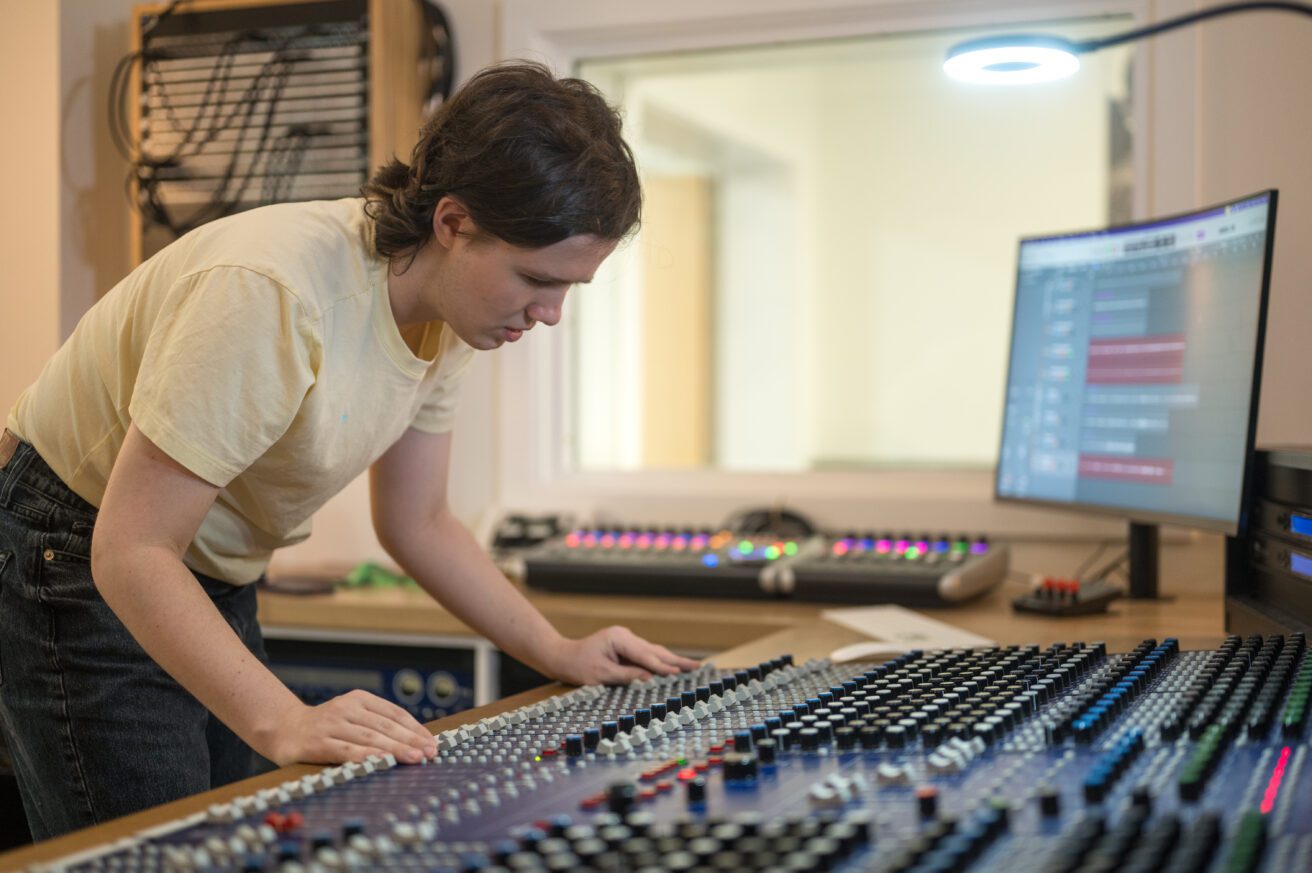
All learning sessions are delivered in a purpose-built recording studio and/or classroom environment equipped with individual audio workstations. The feel of the learning area is intended to reflect a professional music creation environment as much as possible and the intention is for you to feel, on entering the spaces, that you are in a creative zone where you are expected to behave in a professional way, taking responsibility for your own learning, being supportive of others and always with support from your teachers.
How you’ll be assessed
Assessment for both qualification levels is in the form of practical tasks in the classroom and studio environments, utilising industry standard equipment with minimal VI adaptation, this gives a ‘real world’ feel to all tasks, focusing workflow on realistic conditions in a work environment. Written tasks, witness statements, essays and production diaries of work carried out, are the main evidence of practical work.
Work-based learning
The RSL courses are employment focused with work based sessions an essential element in your development.
Level 3 Subsidiary Diploma students undertake weekly studio and work-based sessions alongside Hereford College of Art’s Music Performance Department. These sessions highlight:
- effective ways of working with musicians
- giving musical direction
- organisational skills
- working within a timeframe
- pre-production planning
- selecting and setting up musical and recording equipment
- organising resources, planning a schedule and timescale
Where will it take me?
Level 3 Certificate achievement can result in progression to the Subsidiary Diploma qualification or application to Higher Education (HE).
The nature of the creative industry and its ‘freelance’ employment paths clearly link with other departments within RNC. Many students have combined Business and ICT with an Audio Music Production qualification to give students an opportunity to broaden their skills and widen their future HE/employment opportunities.
Interested in this course?
The first step is a conversation. Get in touch and we'll talk you through everything, including a visit, an assessment, and how to apply.