What was school or education like for you before coming to RNC?
Before coming to RNC, I would say that my education was quite limited. I attended a specialist school for blind and visually impaired students, from the age of about three until I was eighteen, from nursery all the way through to sixth form.
Personally, I enjoyed my time there, but it was only after leaving that I began to realise how much I had missed out on. Socialising wasn’t really much of a thing. Classes and friendship groups were very small, and finding your own people could be difficult. At times, it could be quite lonely.
During secondary school, we started losing teachers because of funding difficulties. We had to attend certain science lessons, including biology, chemistry and physics, at the mainstream school opposite ours. Moving from a class of around eight students into one of thirty could be incredibly disruptive.
There were positive aspects. We had Braille resources, tactile diagrams, reprographics services and staff specially trained to support visually impaired students. Those accessibility provisions were valuable. However, developing independence was difficult, and I didn’t always feel able to participate in education in a way I genuinely enjoyed. I only fully realised what I had been missing when I experienced a different educational environment.
What made you decide to come to a specialist college, and how did you feel when you first started?
I came to RNC following the recommendations of a very good careers adviser and one of my teachers. They thought it would be the perfect place for me to continue my education and explore new opportunities.
Having never attended a mainstream school or college, I was nervous about entering an unfamiliar environment. RNC sounded almost like a dream come true: a college for blind and visually impaired people, where staff understood disability and the challenges that could come with it.
Securing funding was a whole challenge in itself. For a while, I genuinely didn’t know whether I would be able to attend. When it was finally approved and I arrived in 2020, I felt enormous relief. It was exhilarating. I’d never lived away from home or experienced that kind of college environment. Everything was new and exciting, and I thought it was brilliant.
What were your main goals or hopes when you first joined us?
My biggest goal was independence. I wanted freedom and an environment that would help me grow. Looking back, I was still quite young in terms of my maturity and understanding of the world, and I knew I had a lot to learn.
I wanted to spend time with people around my own age, as well as people slightly younger and older. RNC had a diverse mix of students from different walks of life and at different stages of development. Meeting them helped me develop socially and personally.
I also wanted to improve my IT, independent living and mobility skills: learning to navigate unfamiliar places, travel and go off campus. Ultimately, I wanted to become more mature, confident and capable of making my own decisions.
What did the College do to make you feel included, supported, and welcome?
RNC did a great deal to make me feel welcome. We had weekly tutorials where we could raise concerns, discuss how things were going and ask for help. We could also contact our teachers by email.
There were extracurricular activities such as goalball, football and rifle shooting, alongside trips away from campus. I remember opportunities to visit places such as Barry Island, go to the beach and theme parks, and try activities like canoeing. There always seemed to be something different to experience.
Most importantly, staff understood that we were all learning at different levels and developing at different speeds. Nobody was expected to know everything from the beginning. Whatever we did or didn’t know, there were people willing to help us learn. That made me feel supported and welcome.
Can you share a specific example or moment when staff or the College environment really made a difference?
One experience that stands out is organising my story nights at RNC. I’ve always loved storytelling and creative writing, but it was the encouragement of staff that helped me recognise this was a talent worth developing and sharing.
They encouraged me to keep using my abilities and to see where they might take me. With that support, I began organising story nights where around twenty to thirty students would gather to listen to stories and spend time together.
I was proud not only to share something I loved but also to bring people together. Without that encouragement, I might not have had the confidence to organise those evenings or pursue storytelling as seriously as I did. That encouragement stayed with me as I went on to study Creative Writing at university.
How did being in a specialist setting make learning or socialising easier compared to past experiences?
Socialising could still be tricky for me at RNC, partly because I wasn’t especially confident socially back then. In some ways the environment was familiar: My school was also a school for visually impaired students, so I was used to small classes and teachers who understood visual impairment.
The major difference was the emphasis on independence. At my previous school, I often felt people did things for me or alongside me. At RNC, staff would help when necessary, but they mostly encouraged and taught us to do things for ourselves. They gave us the skills to complete tasks independently rather than simply completing them for us.
Living at College made a difference too. I learned to manage more of my everyday life, develop mobility skills, travel more confidently and take responsibility for myself. It wasn’t always easy, but that approach helped me grow.
What are you most proud of achieving during your time at RNC?
Without question, I’m most proud of the independence I gained. I’m proud of the places I learned to travel to, the skills I picked up and the things I became able to do for myself. Those achievements represented real freedom and personal growth.
I’m also proud of becoming Student Governor and being involved in student representation. It meant a great deal to represent other students and contribute to College life. And I’m proud of my story nights, which brought together twenty to thirty students around a shared love of stories.
Do I wish I’d done more? Absolutely. There are always opportunities I wish I’d taken. But I am proud of the independence I gained and the experiences that helped me take the next steps in life.
How has your life outside of RNC changed?
My life has changed significantly since leaving RNC. I’ve grown as a person, become more confident and continued developing my independence.
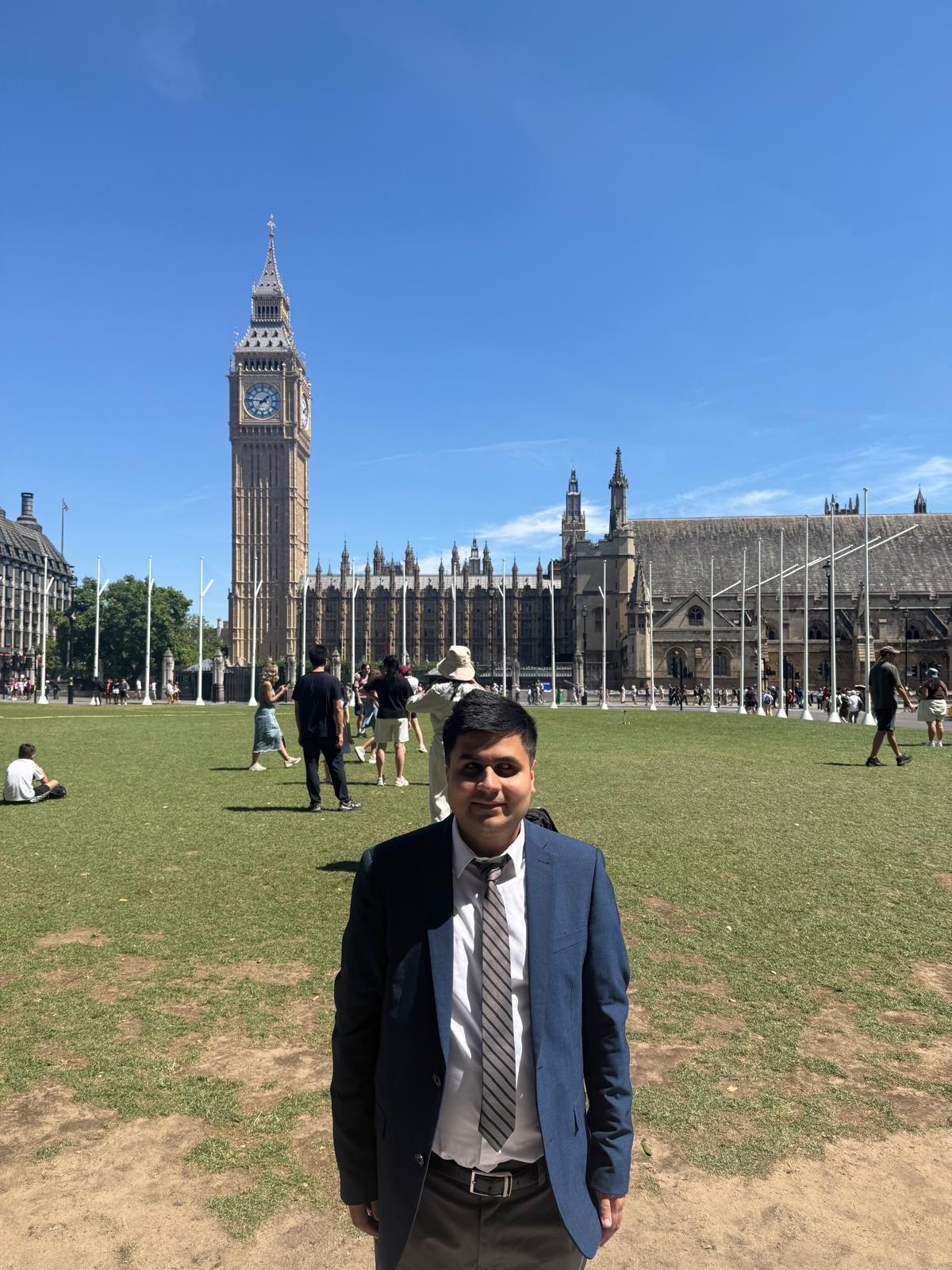
I completed my undergraduate degree in Creative Writing at Kingston University with First-Class Honours, and I’m now studying for an MA in Philosophy, Public Policy and Social Change at University College London. I’ve discovered a real interest in government policymaking, public service and elected politics.
During summer 2026, I completed an internship with the Department for Work and Pensions in the Young People Policy team. At UCL, I was elected Hall Community Officer for Astor College, where I live, and I’ve continued getting involved in student representation and elections.
I’ve also participated in the LOOK Mentoring Programme, completed a Level 3 qualification through VICTA’s Environmental Leadership Programme, taken part in Agent Academy and joined the Disabled Leaders Network. I’m working on building my social media presence and expanding my professional network.
The changes have been personal as well as academic and professional. I have a wider community and lasting friendships formed at RNC. Through those friends, I’ve met even more people and built a much bigger network. I’ve visited the College a couple of times since leaving, too.
RNC helped me build the confidence and independence that made much of this possible. There’s still plenty I want to do, but life has changed enormously, and I’m proud of how far I’ve come.