Dorothy Violet Hill (1894-1974)
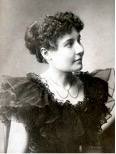
One of the earliest memories I have of my great aunt Dorothy is of her sitting in our living room in front of the fire knitting baby booties on four needles – something perhaps unremarkable for a woman of her generation, except she had been blind since birth. I remember being in awe of her flying fingers as she worked away, while I, sighted, struggled with two needles.
As a child I did not give much thought to blindness. She and my grandmother were a regular part of our Sunday dinners and family celebrations for over 30 years. I certainly didn’t think of her blindness as a disability, which is as much a testament to her accomplishment in managing so efficiently as to my youthful insensitivity. Where did that confidence and skill come from?
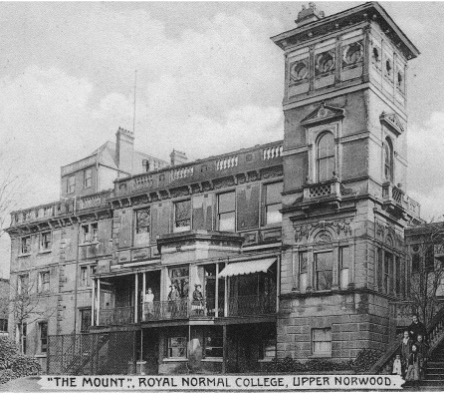
I knew very little of my great aunt’s background. I was told that she had received some musical training in England which enabled her to work as a music teacher in Montreal. It wasn’t until after she had passed away that I found a postcard in amongst her papers of ‘The Mount’, one of the buildings of the Royal Normal College, Upper Norwood. I became curious.
Dorothy Violet Hill was born on 18 September 1894 in Bristol, England, the third daughter of parents George and Florence Hill. George made a modest income as a shopkeeper and newsagent, but home life was not happy. Early in the 1900s, Florence found herself the single parent of three daughters, the youngest of whom was blind. She worked as a florist and times were tough.
I don’t know how my great grandmother came to hear of the College, or how she afforded the tuition, but in 1902, Florence travelled from Bristol to London and enrolled my great aunt as a boarding student. Dorothy would remain there for the next 13 years, only returning to Bristol for the summer holidays in the early years.
Leaving her eight year old daughter must have been a difficult decision, but my great grandmother was a pragmatic woman with a head for business. She herself would emigrate to Canada in 1911 and establish her own florist shop in Montreal. No doubt she found wisdom in the ‘object’ of the College as stated in its 1902 prospectus:
‘Our work is to educate and train the blind as to render them independent, useful members of the community on which they will otherwise become a permanent burden’.
The College’s annual reports from 1902 to 1915 gave a detailed picture of the academic and recreational life of pupils at the College and allowed me to glimpse into my great aunt’s childhood experiences.
Dorothy was in the Preparatory Department when she first arrived and lived with other children in one of the separate houses with playgrounds that were adapted to the special requirements of the blind. In this cottage system, she would go with others to the main building during the day to attend classes such as piano, singing and harmony and other special lectures.
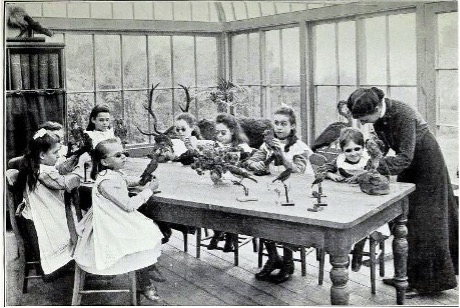
Dorothy can be seen in this 1902 picture of her Natural History class (fourth to the left of the teacher):
Francis Campbell prided himself in the College’s instruction in the science and practice of music which he felt was equal to that given in the best conservatories for the sighted. My great aunt could always be relied upon to play the piano at family gatherings. I had thought that she played by ear but, in reality, her training was much more sophisticated. As a student she studied Braille musical notation and became proficient in writing and reading Braille music and committing it to memory to perform. This skill would allow her limitless possibilities for repertoire in her professional life.
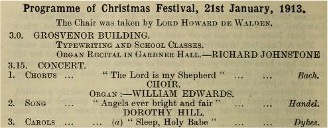
Concerts and plays were regularly held at the College to help the students develop their musical and education skills and grow in confidence. In 1913, Dorothy soloed in the Christmas Festival performing a challenging piece by Handel, ‘Angels ever bright and fair’, as shown in this extract from the Festival programme:
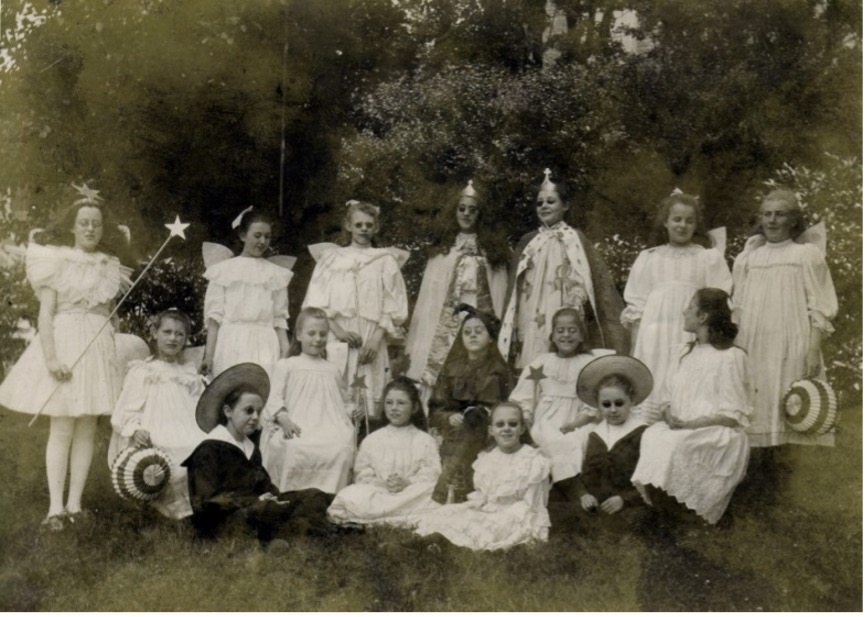
Dorothy is seen here posing in this cast picture (back row, third from the right):
My great aunt was a graceful lady with wonderful posture. Her deportment was one of the many benefits of the gymnastic programme at the College. Campbell strongly believed that exercise was fundamental to health and wellbeing and that it helped to stimulate courage and create independence The College had a large gymnasium with the latest apparatus and exercise programmes.
The grounds also had a skating rink, swimming paths, a lake for rowing, large playgrounds for races and other athletic games. Pathways were created that could accommodate bicycles designed to accommodate up to 11 blind students with one sighted driver. Students were encouraged to be active and daring.
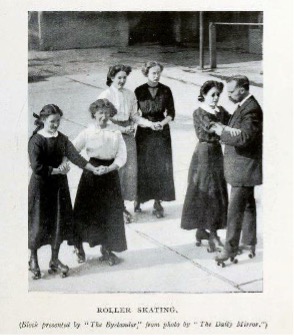
The Daily Mirror newspaper carried this picture of a 19 year old Dorothy taking a turn on the roller-skating rink with a young gentleman:
Dorothy received her Certificate of Completion of Training from the College in the summer of 1915. Despite the world being at war, a month later she boarded the SS Corinthian, in the care of the ship’s matron, to join her mother in Canada.
She lived with her mother and supported herself with work as a vocal and piano teacher, accompanist and paid soloist. When my great grandmother passed away in 1951, Dorothy carried on living by herself with the help of friends and family. Her final position was as a music teacher at the Montreal Association for the Blind in the 1960s. She passed away in 1974.
In research the life of my great aunt, I discovered that what had been mentioned to me casually as ‘some musical training’ was actually a first rate education. Her schooling at The Royal Normal College gave her not only the skills she needed to support herself but also a well-rounded education not afforded to all girls at that time. Her experience at the College helped to shape the competent, cultured, poised and confident woman I knew.
Over the years she carved out a professional and personal life that included many relationships within the church and musical communities allowing her to live an independent and successful life.
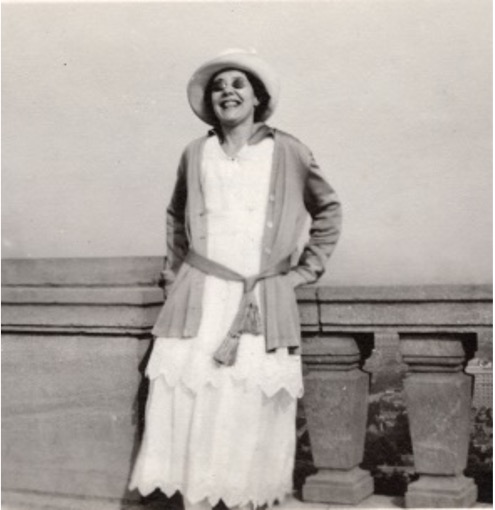
Dorothy is pictured standing at the top of Mount Royal, Montreal. She is wearing a hat and sunglasses and has a beaming smile: